QPU Manufacturers

298 companies building quantum processing units across 11 qubit technologies

Filter by Qubit Technology

All QPU Manufacturers

Showing 298 companies
D-Wave logo

D-Wave

❄️ Superconducting Canada
4.4K
Physical
not-applicable
QEC Method

D-Wave is the pioneer of commercial quantum annealing systems, publicly traded on NYSE (QBTS). The company completed a $400 million ATM equity offering in Q2 FY 2025, achieving record cash balance of $836.2 million. Q3 FY 2025 revenue reached $3.7M (+100% YoY), with YTD revenue of $21.8M (+235% YoY). Stock rose 220%+ in 2025. December 2025: Announced Qubits 2026 quantum computing user conference (January 27-28, 2026, Boca Raton, FL) featuring speakers from Anduril, AT&T, Davidson Technologies, Lighthouse DIG, North Wales Police, PolarisQB, Q-Alliance, Quantum Coast Capital, TECNALIA, and Unissant. Created dedicated U.S. Government Business Unit led by Jack Sears Jr. (VP of U.S. Government Solutions) with 25+ years defense/aerospace experience for federal contracts and secure systems meeting government requirements. FY 2024 bookings exceeded $23 million (+120% YoY), including €10M Q4 booking for 50% Advantage2 capacity in Italy. Demonstrated quantum computational supremacy on real-world problems (Science journal). November 2025: Advantage2 quantum computer deployed at Davidson Technologies (Huntsville, AL) for U.S. government and national defense applications. BASF partnership: hybrid-quantum application reduced manufacturing scheduling from 10 hours to 5 seconds with 14% reduction in lateness. Major partnerships: BASF, E.ON, GE Vernova, UK NQCC, Nikon, NTT Data, NTT DOCOMO, Sharp Corporation, University of Oxford. Market positioning: practical quantum advantage for optimization, strong government focus. Analyst rating: Strong Buy.

Est. 1999
Diraq logo

Diraq

🔌 Spin Qubit Australia
0
99.00%
Fidelity
in-development
QEC Method

Diraq develops silicon quantum processors using CMOS-compatible fabrication processes to create quantum computers that leverage existing semiconductor manufacturing infrastructure, focusing on silicon-based spin qubits that can be manufactured using standard chip fabrication techniques to enable cost-effective scaling of quantum systems for practical applications. November 2025: Selected for DARPA Stage B of Quantum Benchmarking Initiative (up to $15M funding) for silicon CMOS spin qubit technology, advancing toward utility-scale quantum computing by 2033. In September 2025, Diraq and European nanoelectronics institute imec published breakthrough results in Nature demonstrating that silicon-based quantum chips can maintain world-class accuracy even when mass-produced in semiconductor foundries, achieving over 99% fidelity in two-qubit operations. The research, published on September 24, 2025, showed that devices built on imec's 300mm spin qubit platform with isotopically enriched silicon demonstrated reproducible fidelities exceeding 99% for one- and two-qubit operations and above 99.9% for state preparation and measurement. Unlike typical academic 'hero' devices, these results were obtained from randomly selected samples, confirming that scalable, high-fidelity silicon qubits can be produced using standard semiconductor manufacturing methods, marking a critical milestone for commercially viable quantum computing at scale.

Est. 2022
Harvard University logo

Harvard University

Cambridge, United States research

Harvard University is a private Ivy League research university founded 1636 in Cambridge Massachusetts. Central to Harvard quantum initiatives is Harvard Quantum Initiative uniting researchers from various disciplines to advance quantum science and engineering. In September 2025, a team of Harvard physicists led by Mikhail Lukin (Joshua and Beth Friedman University Professor) achieved a historic breakthrough by building the first quantum computer that can operate continuously for over 2 hours without restarting, published in Nature. The system operates an array of more than 3,000 qubits (neutral atoms) and theoretically could continue indefinitely, representing a massive improvement over existing quantum computers that typically run for milliseconds or at most 13 seconds. The breakthrough was achieved by replenishing qubits in real time, injecting new atoms at a rate of 300,000 per second using an optical lattice conveyor belt system to counteract atom loss and maintain quantum information, with over 50 million atoms cycled through the system during the two-hour demonstration. This transformative achievement demonstrates that quantum computers capable of running forever in practice are now just three years away (down from five+ years previously), marking a critical milestone toward practical, continuously operating quantum computing systems. Harvard Quantum Initiative is one of strongest in country heavily focused on quantum networking quantum chemistry and quantum materials research. Harvard conducts quantum research spanning quantum processors quantum algorithms quantum communication networks quantum simulation and quantum sensing. The university maintains partnerships with leading quantum companies including QuEra Computing and government agencies. Harvard serves quantum research community through fundamental quantum research quantum education programs and technology transfer advancing quantum information science and quantum technology commercialization supporting USA quantum leadership.

neutral-atom quantum-research quantum-simulation +2
1636 neutral atom
IBM Quantum logo

IBM Quantum

❄️ Superconducting United States
1.1K
Physical
0
99.50%
Fidelity
gross-code
QEC Method

In 2024-2025, IBM Quantum unveiled its 156-qubit Heron processor featuring a new architectural approach emphasizing modularity and error mitigation, achieving 16 times better performance and a 25-fold increase in speed over 2022 systems. At the inaugural IBM Quantum Developer Conference in 2024, IBM achieved accurate computations on circuits with 100 qubits and gate depths of 100 and 5,000 two-qubit gate operations in under a day's runtime. IBM introduced multi-chip coupling innovations including 'l-couplers' for linking distant chips via cables and 'm-couplers' for tightly connecting adjacent chips, demonstrated with IBM Quantum Flamingo connecting two Heron R2 chips, with the production-ready Flamingo system expected in 2025. IBM's roadmap extends to 2026 with the Kookaburra system demonstrating the first integration of logical qubit processing with quantum memory, and by 2028, the Starling system will operate 200 logical qubits requiring approximately 10,000 physical qubits using IBM's efficient LDPC codes. November 2025: IBM announced the 120-qubit Nighthawk processor with 218 next-generation tunable couplers, enabling 30% more circuit complexity while maintaining low error rates. IBM achieved 10x speedup in quantum error correction decoding over leading approaches, completed one year ahead of schedule. IBM-Cisco partnership announced (November 20, 2025) to build networked distributed quantum computing infrastructure with first proof-of-concept targeted by end of 2030. IBM claims their LDPC codes approach requires 90% fewer qubits than Google's surface code method. IBM Quantum Loon experimental processor demonstrated all key fault-tolerant computing components for the first time.

Est. 2016
Infleqtion logo

Infleqtion

⚛️ Neutral Atom United States
1.6K
Physical
0
99.73%
Fidelity
in-development
QEC Method

In 2025, Infleqtion demonstrated a 16x16 neutral atom array - the largest reported array of its kind in the UK - as part of the SQALE project at the NQCC, marking a crucial step towards building fault-tolerant quantum processors. The company's commercial platform is built around a 1,600-qubit lattice, the largest neutral-atom array reported to date, achieving an entangling-gate fidelity of 99.73%. In September 2025, Infleqtion agreed to merge with Churchill Capital Corp X in a transaction valuing Infleqtion at a pre-money equity of $1.8 billion. In 2024, Infleqtion was contracted to develop a neutral atom quantum computing testbed for the UK's National Quantum Computing Centre (NQCC), installing the first neutral atom quantum computer at the NQCC in July 2024. The company unveiled the world's largest qubit array comprising 1600 qubits and a 5-year roadmap signaling progress towards delivering fault-tolerant quantum computers. Infleqtion's approach utilizes multiple atomic species within a single system, representing a novel strategy for enhancing performance. 2025 Developments: In September 2025, Infleqtion agreed to go public via $1.8 billion SPAC merger with Churchill Capital Corp X, generating over $540 million in gross proceeds. In June 2025, secured $100 million Series C from Glynn Capital, Counterpoint Global, S32, and SAIC. In June 2025, secured £2.2 million UK funding for Sqale neutral atom quantum computer at NQCC. In July 2025, announced $50 million Illinois partnership over 4 years to build utility-scale neutral atom quantum computer. In October 2025, partnered with Silicon Light Machines for MEMS technology integration

Est. 2021
IonQ logo

IonQ

Trapped Ion United States
64
Physical
0
99.99%
Fidelity
in-development
QEC Method

IonQ is a leader in trapped-ion quantum computing, publicly traded on NYSE (IONQ). In 2025, the company secured landmark funding including a $2 billion institutional investment and completed a $1 billion equity offering, bringing cash position to $1.6 billion. Q3 2025 revenue reached $39.9 million (+221.5% YoY), with FY 2025 guidance of $106-110 million. December 2025: Through subsidiary ID Quantique, deployed Slovakia's first national quantum communication network (skQCI) as part of the EU-wide EuroQCI initiative, connecting the Presidential Palace, National Security Authority, and Slovak Academy of Sciences. Also announced strategic quantum-biotech partnership with CCRM to accelerate next-generation therapeutic development. Invested in Horizon Quantum Computing's $110M PIPE financing alongside Fortune 50 technology companies. The company executed an aggressive M&A strategy in 2024-2025 totaling ~$2.5 billion across 7+ acquisitions: Oxford Ionics ($1.075B - trapped-ion technology), ID Quantique ($250M - quantum networking), Capella Space ($318M - satellite imaging), Vector Atomic (atomic clocks/inertial sensors), Qubitekk (quantum networking), Skyloom Global (optical communications), and Lightsynq Technologies (entanglement distribution). This positions IonQ for full-stack quantum-to-space capabilities. Major contracts include $54.5 million from US Air Force Research Lab. IonQ achieved world-record 99.99% two-qubit gate fidelity and #AQ 64 on its Tempo system. Named only quantum company in Deloitte's 2025 Technology Fast 500 (nearly 2000% revenue growth 2021-2024). November 2025: CEO Niccolo de Masi testified to Congress that IonQ's commercial era has begun. Roadmap targets CRQC by 2028 (~20,000 physical qubits) and ~2 million physical qubits by 2030. Launched Geneva Quantum Network (GQN) with Swiss consortium (UNIGE, CERN, Rolex SA). Key partnerships include CCRM (biotech), Heven AeroTech (strategic investor, $100M Series B), General Dynamics IT, SK Telecom, AstraZeneca, Ansys, Classiq, and Horizon Quantum. Focus areas: defense, government, enterprise, healthcare, and biotech sectors.

Est. 2015
Isentroniq logo

Isentroniq

Paris, France Company

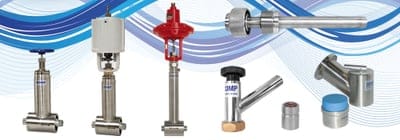
Isentroniq is a Paris-based quantum hardware startup founded in May 2025 by Paul Magnard (PhD in experimental quantum information processing from ETH Zürich, former lead architect at Alice & Bob) and Théodore Amar (former Bain & Company consultant, ex-head of marketing at Hilti) that develops next-generation wiring infrastructure for superconducting quantum computers to solve the critical cryogenic power and space bottleneck that currently limits scaling beyond a few hundred qubits. In October 2025, Isentroniq raised €7.5 million in pre-seed funding led by Heartcore Capital with participation from OVNI Capital, Kima Ventures, IXCORE Group, Better Angle, EPSL VC, plus support from Bpifrance and France 2030 to industrialize its proprietary dense, near-heatless wiring technology that enables 1,000x more qubits to be integrated into existing dilution refrigerators. The company's breakthrough wiring solution is designed to remove heat, cost, and space constraints inside cryostats and unlock the path to million-qubit systems, with the potential to reduce the price of a million-qubit quantum computer from tens of billions to approximately €50 million while solving the wiring deadlock that has become the primary barrier to scaling superconducting quantum processors as control and readout lines currently add excessive heat and complexity that cap systems at a few hundred qubits.

superconducting-qubits quantum-hardware quantum-components +2
2025 superconducting
Multiverse Computing logo

Multiverse Computing

Spain
software
Tech
quantum-inspired
QEC Method

Multiverse Computing is a leading quantum software company specializing in quantum applications for the financial services industry, offering quantum solutions that provide competitive advantages in portfolio optimization, risk management, and derivative pricing. Founded in 2019 by Enrique Lizaso and Alfonso Rubio-Manzanares, the company has developed Singularity, a comprehensive quantum software platform that enables financial institutions to leverage quantum computing without requiring deep quantum expertise. Multiverse's solutions address critical financial challenges including portfolio optimization with complex constraints, Monte Carlo simulations for risk assessment, and machine learning for algorithmic trading and fraud detection. The company has established partnerships with major financial institutions, central banks, and consulting firms across Europe, North America, and Asia. Their quantum advantage demonstrations have shown significant improvements in optimization problems, with some algorithms achieving exponential speedups over classical approaches. Multiverse Computing's focus on practical, near-term quantum applications in finance positions them at the forefront of the quantum computing revolution in financial services, helping institutions prepare for quantum advantage while navigating the transition from classical to quantum computing paradigms. 2025 Developments: In March 2025, Multiverse Computing secured $27.1 million Series A led by Columbus Venture Partners with Quantonation Ventures. In June 2025, secured $215 million Series B led by Bullhound Capital to scale CompactifAI technology. Series B investors include HP Tech Ventures, SETT, Forgepoint Capital, CDP Venture Capital, Santander Climate VC, and Toshiba. CompactifAI achieves up to 95% AI model compression while maintaining performance. Targeting $106 billion AI inference market

Est. 2019
Pasqal logo

Pasqal

⚛️ Neutral Atom France
200
Physical
0
in-development
QEC Method

Pasqal is a Paris-based neutral atom quantum computing company founded as spinoff from Institut d'Optique. Total financing €140+ million, including €100 million Series B (January 2023) led by Temasek. Investors: Quantonation, Defense Innovation Fund, Daphni, Eni Next, EIC Fund, Wa'ed Ventures, Bpifrance. December 2025: Integrated into Scaleway's Quantum-as-a-Service (QaaS) platform, reinforcing sovereign cloud infrastructure for European users with direct cloud access to Pasqal's neutral-atom QPUs. November 24, 2025: Deployed Saudi Arabia's first quantum computer in partnership with Aramco - a 200-qubit neutral-atom system for industrial applications, the first in the Middle East. Government contracts: €13 million from EuroHPC JU for EuroQCS-Italy (CINECA, Bologna). Partnerships: Scaleway (QaaS cloud), Singapore National Quantum Programmes (MRCA signed November 2025), Welinq for quantum interconnects (April 2024), IBM Qiskit integration. Technology: Orion Beta platform deployed at France's GENCI and Germany's Forschungszentrum Jülich. Technical milestone: Successfully loaded over 1,100 neutral atoms in a single shot. Roadmap: 250-qubit QPU for quantum advantage (H1 2026), 10,000-qubit QPUs (2026-2027). Market positioning: neutral atom quantum processors with focus on HPC integration, European sovereign cloud access via Scaleway, IBM partnership, strong European and Middle East government support. European IPO anticipated for late 2025.

Est. 2019
Q-CTRL logo

Q-CTRL

Australia
software
Tech
quantum-control
QEC Method

Q-CTRL is a leading quantum technology company specializing in quantum control infrastructure software that makes quantum computing hardware more stable, reliable, and useful. Founded in 2017 by Michael Biercuk, a quantum physicist from the University of Sydney, Q-CTRL has developed a comprehensive suite of quantum firmware and software tools that apply machine learning and control theory to reduce errors in quantum systems. The company's products include Fire Opal for quantum circuit optimization, Black Opal for quantum computing education, and Boulder Opal for quantum control optimization. Q-CTRL's technology has been validated on quantum computers from major providers including IBM, Google, and Rigetti, demonstrating significant improvements in quantum algorithm performance through error suppression and noise mitigation. August 2025: DARPA selected Q-CTRL for the Robust Quantum Sensors (RoQS) program with an A$38M (US$24.4M) contract for field-validated quantum sensing technologies for high-performance military vehicles. On September 16, 2025, Q-CTRL announced a strategic partnership with QUCAN Quantum Technologies (QUCAN), merging complementary strengths in quantum control software and hardware to deliver quantum sensing solutions optimized for real-world field deployment, initially targeting defense and aerospace applications. On October 9, 2025, Q-CTRL's Ironstone Opal, a ruggedized quantum sensor system designed for navigation in GPS-denied environments, was named one of TIME magazine's Best Inventions of 2025, recognized for its ability to provide precise positioning data where traditional navigation systems fail. Market positioning: critical infrastructure provider in quantum computing stack, expanding into defense quantum sensing with major DARPA backing.

Est. 2017
Qilimanjaro logo

Qilimanjaro

Madrid, Spain Company

Qilimanjaro Quantum Tech is a Barcelona Supercomputer Center spinout founded in 2019 that develops quantum computing solutions combining quantum annealing and gate-model quantum computing approaches, creating hybrid quantum-classical systems that can solve optimization problems and quantum simulations for industries including finance, logistics, and materials science, leveraging Spain's supercomputing expertise and European quantum initiatives to advance practical quantum computing applications with focus on near-term quantum advantage in optimization and simulation problems. In September 2025, Qilimanjaro announced a strategic partnership with Qblox, a Netherlands-based quantum control hardware company, to integrate Qblox's control electronics with Qilimanjaro's superconducting quantum processors, enabling enhanced scalability and performance for their quantum computing systems through advanced control and readout capabilities. In October 2025, Qilimanjaro joined the IMPAQT UA cooperative consortium as the first analog quantum computing company, focused on building interoperable and scalable quantum systems through collaborative research and development with other European quantum technology organizations. In October 2025, Qilimanjaro Quantum Tech and QURECA signed a collaboration agreement for quantum education, including workshops on analog and hybrid quantum computing with hands-on access to Qilimanjaro's platform to advance quantum computing education and workforce development. 2025 Developments: In October 2025, pioneered QiliSDK, an open-source Python framework.

control-electronics hardware quantum-consulting +7
2019 superconducting
Quantinuum logo

Quantinuum

Trapped Ion United Kingdom
98
Physical
48
Logical
99.92%
Fidelity
color-code
QEC Method

Quantinuum (Honeywell Quantum Solutions + Cambridge Quantum merger) is pursuing the first universal fault-tolerant quantum computer. In September 2025, raised $600 million at $10 billion pre-money valuation led by Quanta Computer, NVentures (NVIDIA VC), and QED Investors. Also JPMorganChase, Mitsui, Amgen, Cambridge Quantum Holdings, Serendipity Capital, Honeywell. Previous round: $300 million at $5B valuation (January 2024). November 2025: Launched Quantinuum Helios with 98 barium ion qubits (upgraded from 56 ytterbium), achieving approximately 99.92% two-qubit gate fidelity. Helios supports up to 48 fully error-corrected logical qubits at 2:1 encoding rate. Switched from ytterbium to barium ions enabling visible-light laser manipulation (improved cost, component lifetime, scalability). Integrated NVIDIA GB200 for real-time error decoding with 'on the fly' error correction capability. Early adopters: SoftBank, JPMorgan Chase, Amgen (biologics research), BMW (fuel cell research). Selected for DARPA Stage B of Quantum Benchmarking Initiative (up to $15M funding). Strategic partnerships: NVIDIA (founding collaborator for Accelerated Quantum Research Center), Singapore National Quantum Office (Helios installation 2026), Qatar Invest Qatar (Middle East expansion May 2025), RIKEN, SoftBank, Infineon, STFC Hartree Center. Market positioning: most accurate commercial general-purpose quantum computer with industry-leading gate fidelities.

Est. 2021
QUDORA logo

QUDORA

Munich, Germany Company

QUDORA is a German quantum computing developer specializing in trapped-ion quantum computers using Near-Field Quantum Control (NFQC) technology. The company's flagship NFQC technology relies on ions confined in electromagnetic traps and manipulated with finely tuned laser pulses, enabling room-temperature operation that reduces infrastructure costs compared to superconducting circuits requiring millikelvin temperatures. QUDORA's compact, scalable architecture allows dozens of ions to be entangled in a single chip-scale module to create fault-tolerant quantum processors capable of running complex algorithms in minutes with cloud-based workflow compatibility. In September 2025, QUDORA announced a strategic collaboration with South Korean research institutions and technology partners to establish quantum computing research centers in Seoul and Daejeon, focusing on quantum applications for advanced materials, battery technology, and semiconductor manufacturing, positioning South Korea as a key market for QUDORA's Asia-Pacific expansion strategy. In October 2025, QUDORA closed a strategic partnership with Kensho, a Taiwanese distributor, to accelerate quantum computing commercialization in Taiwan, combining QUDORA's trapped-ion platform with Kensho's deep ties to Taiwan's precision-manufacturing sector to bring quantum-enhanced tools into laboratories, factories, and corporate data centers across Asia-Pacific. The alliance generated significant attention at SEMICON Taiwan 2025, targeting applications in semiconductor design, pharmaceutical research, and industrial optimization while expanding QUDORA's presence beyond Europe into the strategically important Asia-Pacific market.

cryogenics hardware quantum-algorithms +9
2023 superconducting
Rigetti Computing logo

Rigetti Computing

❄️ Superconducting United States
84
Physical
0
99.50%
Fidelity
in-development
QEC Method

Rigetti Computing is a pioneer in superconducting quantum computing, publicly traded on NASDAQ (RGTI). Completed $350 million ATM equity offering in Q2 2025. Quanta Computer invested $35 million at $11.59/share (closed April 2025). Q3 2025 revenue: $1.95M (-18% YoY), net loss ~$201M (largely non-cash warrant charges). December 2025: Supporting NVIDIA's NVQLink platform to tightly couple AI supercomputers with quantum processors for hybrid workloads. Stock rose 300%+ YTD despite volatile November correction. Major institutional investors: Vanguard (+60.9%, 8.64M shares) and BlackRock (+39.4%, 5.97M shares). November 2025: Launched Cepheus-1-36Q, industry's first multi-chip quantum computer achieving 99.5% median two-qubit gate fidelity (2x improvement over Ankaa-3). Technology roadmap: 100+ qubit chiplet system at 99.5% fidelity by end 2025, 150+ qubits by 2026, 1,000+ qubits by 2027. September 2025: $5.8M Air Force Research Lab contract for quantum networking (with QphoX). DARPA Quantum Benchmarking Initiative Stage A (up to $1M). MOU with C-DAC India for hybrid quantum systems. Montana State University QCORE partnership with Novera QPU installation. Two Novera 9-qubit systems sold for $5.7M. Plans Italian subsidiary expansion. Strategic focus on government, research partnerships, and hardware commercialization. Analyst rating: Moderate Buy with $40.60 average price target.

Est. 2013